Alcohol is a bit more regulated than in the Netherlands, though. You usually buy stronger drinks and wine at Alko, the Finnish state-run off-licence. Supermarkets mainly sell lighter alcoholic drinks.
“The more of Finland I discover, the more I feel at home.”
Michelle ∙ Lost in Norvana
Everything you need to know about Finland
What you need to know about Finland
Finland, Suomi in Finnish, is the easternmost of the Nordic countries and borders Sweden, Norway and Russia. With an area of around 338,000 km², it is more than eight times the size of the Netherlands, yet only about 5.6 million people live there. You notice that as soon as you leave the cities: lots of space, little traffic and, above all, an incredible amount of nature.
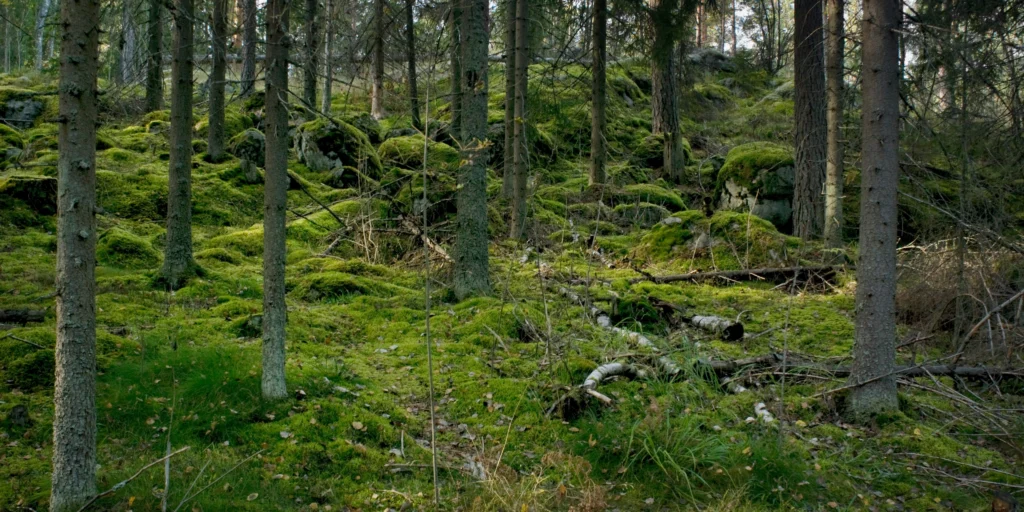
Where Norway is known for fjords, mountains and spectacular differences in altitude, Finland feels much calmer and more expansive. Forests, lakes and bogs shape the landscape here. It’s not for nothing that Finland is called the land of a thousand lakes, although in reality there are almost 188,000.
Finland is a member of the European Union and uses the euro. That makes the practical side of travelling pretty easy. There’s no currency to convert, and you can pay by card almost everywhere.
The land of lakes and forests
In Finland, water is never really far away. Especially in the central and eastern parts of the country, you’ll find lakes, small islands and wooden cottages on the waterfront everywhere. A mökki, a Finnish holiday cottage in the middle of nature, is a real part of life for many Finns.
So it’s no coincidence that the classic picture of Finland is a wooden cottage, a sauna, a jetty and a still lake. Especially in summer, when the evenings seem to go on forever, you immediately understand why so many Finns prefer to spend their free time outside the city.
Finnish climate and weather
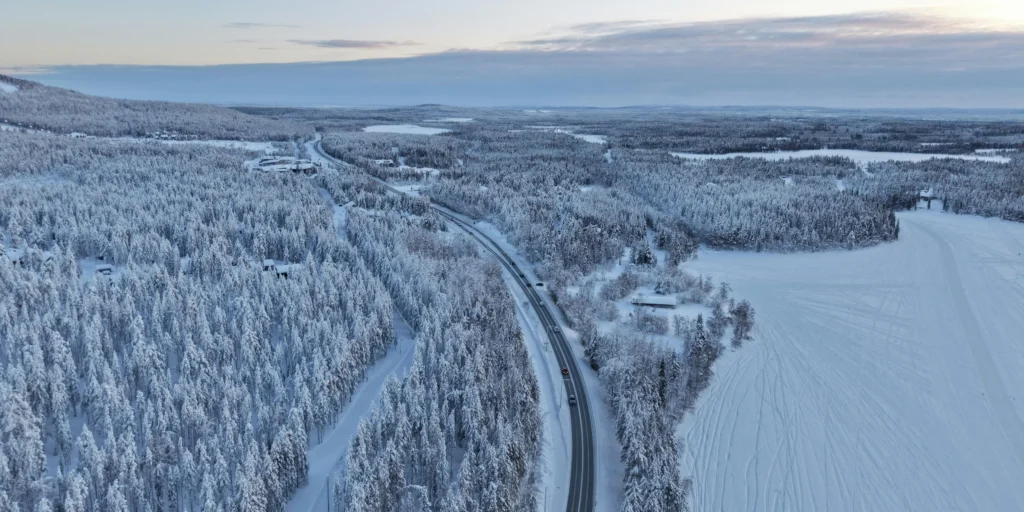
Finland has distinct seasons. The winters are cold and snowy, while the summers are relatively mild and can sometimes be surprisingly warm. The further north you travel, the bigger the differences become.
Along the west coast, for example around Vaasa, Kalajoki, Oulu and Kemi, the Gulf of Bothnia has a big influence on the climate. In summer this brings fairly pleasant temperatures, while in winter the coast is completely transformed as parts of the sea freeze over.
That frozen landscape is one of the things that sets Finland apart from Norway. Where Norway is mainly about mountains and fjords, here in winter you get vast white plains of sea ice.
Finnish culture
Finns are known for being calm, direct and pretty down-to-earth. Small talk plays a smaller role than we might be used to, but that doesn’t mean people are unfriendly. Quite the opposite: once you’ve made a connection, Finns are often very hospitable.
A well-known Finnish concept is sisu. It’s hard to translate literally, but it roughly stands for perseverance, mental strength and not giving up when things get tough. It’s often seen as an important part of the Finnish identity.
Silence is experienced differently in Finland, too. Where we sometimes feel the urge to fill a silence straight away, Finns often don’t see the need. That actually suits the country perfectly: calm, unhurried and without too much fuss.
Sauna in Finland
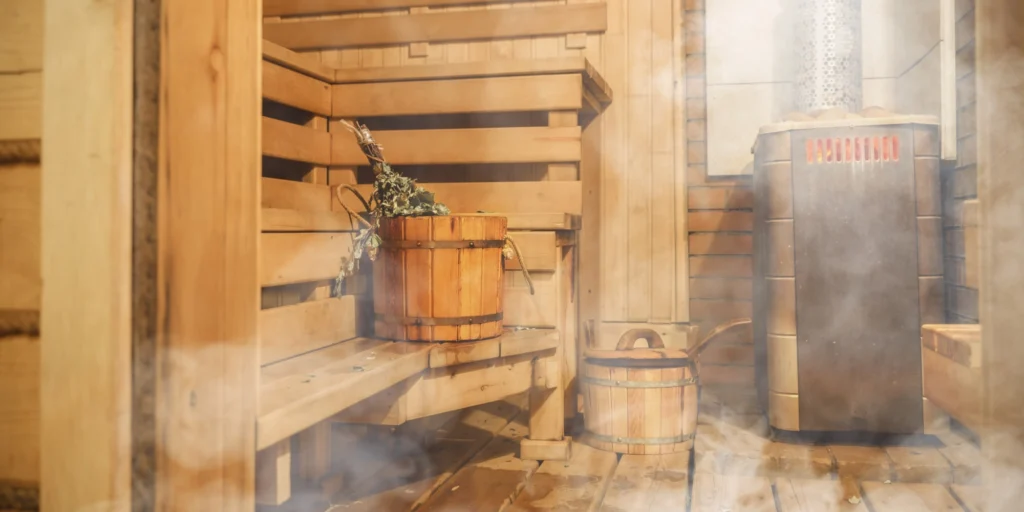
You can’t really explain Finland without talking about sauna. Here, the sauna isn’t a luxury extra or something for a spa weekend, but a fixed part of everyday life.
You’ll find saunas in houses, holiday cottages, apartment blocks and hotels. For many Finns, it’s a place to relax, catch up, or simply say nothing at all for a while.
In winter it gets even more interesting. Many Finns then combine the heat of the sauna with a dip in ice-cold water, or even a hole cut in the ice. That sounds pretty extreme, but for many Finns it’s the most normal thing in the world.
Public holidays
6 December
Independence Day
On 6 December, Finland celebrates its independence. It’s an important national holiday that is marked in a fairly understated way, with commemorations, ceremonies and candles in the windows.
Late June
Juhannus
Juhannus is the Finnish midsummer and one of the cosiest times of the year. Many Finns head to their mökki in the countryside, where sauna, bonfires, food and long summer evenings take centre stage.
Finnish cuisine
Finnish cuisine revolves largely around ingredients from nature. Fish, game, berries, mushrooms, potatoes and rye play a big role. The food is usually fairly simple, but that’s exactly what makes it so recognisable.
Lohikeitto
A classic is lohikeitto, a creamy salmon soup with potato, leek and dill. On a cold day in particular, it’s exactly the kind of dish that suddenly makes you understand why it’s so popular.
Karjalanpiirakka
You’ll also come across karjalanpiirakka, Karelian pasties with a rice filling, a lot. Traditionally you should eat these with a topping made of egg and butter.
Korvapuusti
And if you order a coffee, chances are there’s a korvapuusti, a Finnish cinnamon bun, waiting for you somewhere too.
Groceries and paying
Paying in Finland is nice and easy, because Finland simply uses the euro. You can pay by card almost everywhere and you’ll rarely need cash.
For groceries you’ll mainly come across chains such as K-Market, S-Market, Prisma and Lidl. The larger Prismas and K-Citymarkets are often huge and sell clothing, household goods and outdoor gear as well as food.
Helsinki
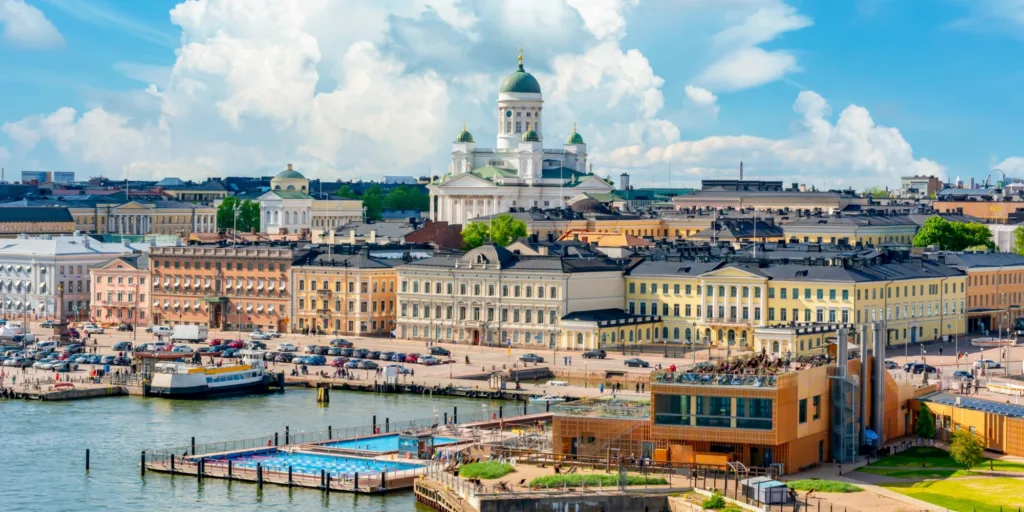
Helsinki is the capital of Finland and lies right on the Baltic Sea. The city feels modern and easy to navigate, with lots of design, architecture, market halls, coffee bars and, of course, water.
Off the coast lie hundreds of small islands, so a city break here is easy to combine with nature and boat trips. Suomenlinna, the famous sea fortress on an island just off the coast, is also a popular outing.
From Helsinki it’s also easy to travel on. Trains connect the capital with places such as Tampere, Turku, Oulu and ultimately Lapland too.
Driving in Finland
Driving in Finland is generally relaxed. The roads are often long, straight and quiet, especially once you’re outside the bigger cities.
Unlike in Norway, you don’t have to worry about complicated toll registrations in Finland. That makes a road trip that little bit easier.
You do need to watch out for animals on the road, though. Elk in particular can cross unexpectedly, and further north you’ll also come across lots of reindeer.
Travelling through Finland by train
Finland has a good rail network operated by VR. From Helsinki you can take the train to almost all the larger towns and cities, including places in the north.
A well-known option is the night train to Rovaniemi and other destinations in Lapland. You board in the south in the evening and wake up the next morning surrounded by forests and snow.
There are even trains that let you take your car with you. Handy if you want to skip a large part of the distance and then continue your road trip on your own.
Dreaming of Finland yet?
Then leave the research to me. Choose one of my Finland trips, have your trip completely tailor-made, or head off on your own with a personal travel plan.
Nature and the outdoors
A huge part of Finland consists of forest, lakes and nature reserves. That means you never really have to travel far to get away from the crowds.
The country has dozens of national parks, spread from the south to deep into Lapland. Well-known examples are Nuuksio near Helsinki and Oulanka in the north-east.
The Kvarken Archipelago
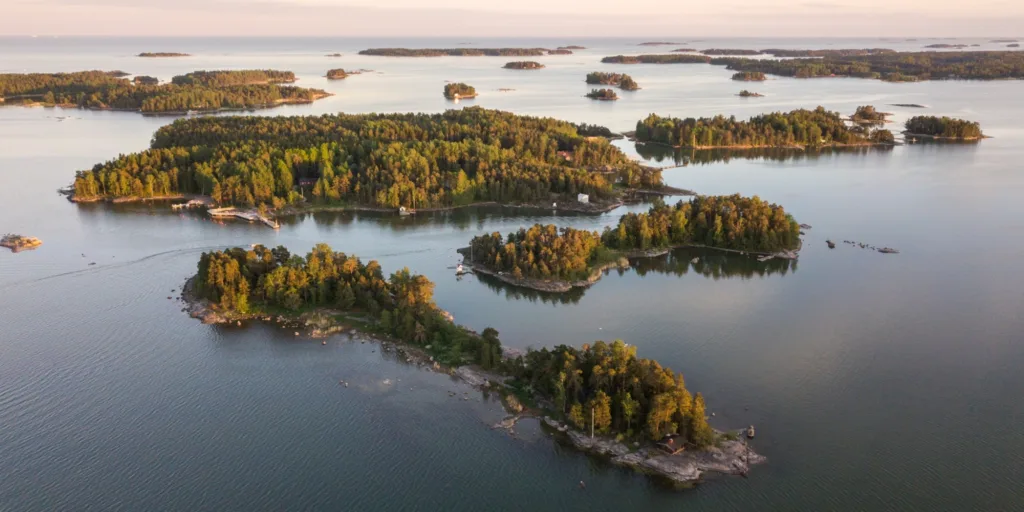
On the west coast lies the Kvarken Archipelago, a UNESCO World Heritage Site between Finland and Sweden. The landscape is made up of hundreds of small islands, shallow water and a coastline that is still changing.
That’s because the land here has been slowly rising since the last Ice Age. So year after year, new land literally emerges from the water.
Geology aside, it’s above all a wonderfully quiet region, with lots of water, nature and small islands. Exactly the kind of place you don’t necessarily visit for one big highlight, but for the atmosphere.
Finland in winter
In winter, Finland is completely transformed. Forests disappear under a thick layer of snow, lakes freeze over and in the north the days become extremely short.
That’s exactly when the typical winter atmosphere Finland is so famous for comes alive. Think snow-covered forests, huskies, saunas, the northern lights and temperatures that suddenly make you think very differently about clothing.
The Bothnian coast in particular is special. Large parts of the sea can freeze over there, making activities possible that you’ll find in few other places.
Icebreakers and sea ice
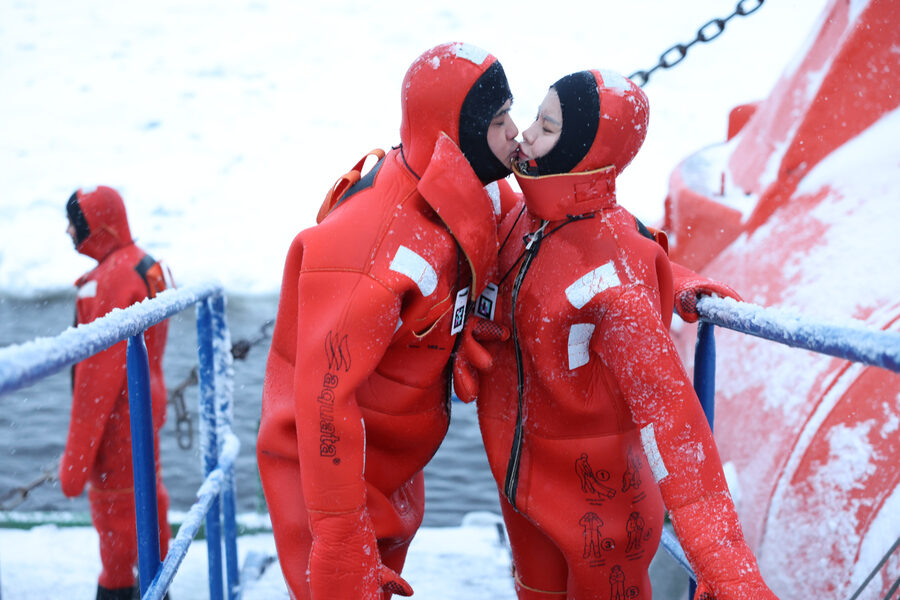
In winter, the Gulf of Bothnia turns into a completely different landscape. Large parts of the sea freeze over and around Kemi a vast white expanse of snow and ice appears. That’s exactly what makes it possible to do activities here that you’ll find in very few other places.
One of the best known is a trip on an icebreaker, a ship that literally forces its way through the frozen sea ice. The sound alone, and the feeling of the ship breaking through the ice, make a trip like this special. Some excursions go one step further and let you float in the ice-cold water between the ice floes in a special survival suit.
There are also hovercraft trips across the sea ice. You glide over snow, ice and open water and reach places that are otherwise almost impossible to get to. It’s precisely that combination of emptiness, cold and vastness that makes this part of Finland so special in winter.
Northern lights in Finland
The northern lights are best seen in the north of Finland, usually between September and March. The further you travel towards Lapland, the better the conditions are on average.
Still, it’s very unpredictable. You need a clear sky, little light pollution and enough solar activity for a visibly green sky.
Frequently asked questions about Finland
Do you need a passport for Finland?
As a Dutch citizen, you can travel to Finland with a valid identity card or a valid passport.
Is Finland the same as Lapland?
No. Lapland is a region in the north of Finland. The region also extends into parts of Sweden and Norway.
Can you pay in euros in Finland?
Yes. Finland is part of the eurozone.
How dark is Finland in winter?
That depends very much on where you are. In Helsinki the sun still rises even in the middle of winter, although the days are short. Far up north, the sun may not rise above the horizon at all for several weeks during the polar night.
Why is sauna so important in Finland?
Because sauna is much more than wellness. It’s part of everyday life and, for many Finns, a place to relax, spend time together or simply not have to do anything at all for a while.