Opens in a new tab
Michelle from Lost in Norvana

“Norway never stops surprising me. Even in places I’ve been before.”

Michelle

Everything you need to know about Norway

What you need to know about Norway

Norway, in Norwegian Kongeriket Norge, is the westernmost part of Scandinavia. Because the country wraps around Scandinavia in a kind of embrace, it borders Sweden, Finland and Russia. Officially, Svalbard and several parts of the Antarctic regions also belong to Norwegian territory. With an area of 385,155 km², Norway is no less than nine times the size of the Netherlands and bursting with unspoilt nature. Norway is not a member of the EU, but it is part of the Schengen Area. That’s why you can travel with an ID card instead of a passport if you like.

With only 5.6 million inhabitants, Norway is the fourth most sparsely populated country in Europe. Apart from a handful of ‘big’ cities, most of the country is dominated by rugged forests, blue-green fjords and dizzyingly high mountains. As its Norwegian name already gives away, Norway is a constitutional monarchy. The country is divided into 15 counties and 357 municipalities, and has had King Harald V at its head since 1991. The country is governed by parliament, though: the Storting. 

Even though the king has limited power, Norwegians have enormous respect for their king. Norway also has a remarkably strong sense of national pride, which you’ll see clearly on the national holiday on 17 May. All over the country there are parades with flags, people in traditional dress and other festivities. Oslo in particular celebrates the day in grand style. On top of that, the country is extremely open-minded, with a high tolerance for other cultures and nationalities, and for gender equality and the LGBTQ community.

Bezoekers op de top van de Preikestolen aan het Lysefjord in Noorwegen

Norwegian climate and weather

The north of Norway has several different climates. On the west coast you’ll find a maritime climate that’s slightly cooler than the Netherlands. In the far north there’s a tundra climate, and east of the mountain ranges a continental climate. Around the fjords, more than 4,000 millimetres of rain falls each year. So nobody can deny the rumour that it rains a lot in Norway! But of course a country can’t stay beautifully forested and green without ‘a little’ rain. Further north and east, no more than 600 millimetres falls per year. Quite a difference, right?

The weather in Norway is incredibly varied and, above all, unpredictable. In summer it can be 29°C, but you can just as easily find yourself in a snowstorm on top of a mountain. If you’re well prepared and keep a close eye on the forecast, it’s perfectly manageable. Just keep it in mind when you’re packing your suitcase!

Norwegian culture

Norwegians value their culture highly. On 17 May the Norwegian Constitution is celebrated on Grunnlovsdagen. All over the country there are processions and parades in traditional Norwegian dress. On 23 June Norwegians celebrate Jonsok, the start of summer.

Sport is very important to Norwegians. Winter sports in particular are taken very seriously. Cross-country skiing was even invented here! Ski jumping, biathlon and alpine skiing also draw big crowds. In summer, football, handball and hockey are popular too.

Norway has a diverse music industry. Where folk music once dominated, today there’s much more room for genres such as metal, rock and also traditional Sámi music, which sings of animals or moods.

The most important thing to know about Norwegians is that they’re very attached to their personal space. It isn’t appreciated if you sit down at a table where someone is already sitting, leave a seat free on the bus if you can, and Norwegians will look at you strangely if you randomly say hello to a stranger in the street. Most people think Norwegians are reserved and rude, but they actually do this out of politeness and so as not to bother you. They’re an introverted people. Want to read more about Norwegians? Then read my blog 7 things you need to know about Norwegians when you go on holiday to Norway.

Everything you know about Norwegians, how reserved they are and how attached they are to their personal space, you can forget once you head into the mountains. When you meet a Norwegian out in nature, they suddenly do say a friendly hello. They’ll also happily show you the way, give you tips about the area or tell you a great story.

Public holidays

Norwegians love Easter and Christmas. Both are always celebrated exuberantly, and especially in the smaller municipalities the shops are closed for days. Besides the standard public holidays, Norway has two more big holidays that turn the whole country upside down. If you happen to be travelling on one of these days, bear in mind that almost everything is closed and public transport runs a different timetable, but also that in lots of places you can join in the celebrations.

17 May

Constitution Day

Also known as ‘Grunnlovsdagen’. Expect processions, marching bands, waving flags and people celebrating everywhere in traditional dress. In Oslo you can even wave to the king on this festive day. Absolutely everything is pulled out of the bag to celebrate Norway’s Constitution Day.

23 June

Midsummer festival

In most places in Norway, huge bonfires are lit, flower wreaths are woven and mock weddings are held to celebrate ‘new life’. During the day most shops are simply open, but in the evening every Norwegian grabs the excuse to party with both hands.

Norwegian cuisine

In Norwegian cuisine, fish and seafood play a big role. In many places you can also get game such as reindeer and elk. Either way, the cuisine is rooted in farming, livestock and fishing. Because the country is so vast, the food varies quite a bit from region to region. In the north they cook a lot with berries and game, while on the west coast you’ll mainly find fish. Klippfisk, for example, is typically Norwegian. This dried and salted cod is often used in dishes such as Bacalao (originally Portuguese, but adopted by the Norwegians).

Taking a ferry across? Then don’t forget to look out for Norwegian Svele! This fluffy pancake is spread with smørkrem (sweet butter cream) or topped with traditional Norwegian brunost (caramelised goat’s cheese) and sold with your coffee. So good!

Noorwegen

Currency in Norway

Norway isn’t a member of the EU, so you can’t pay with euros there. Norway uses the Norwegian krone (NOK). The krone hasn’t been doing so well lately. 1 NOK is currently worth about €0.085, so 10 NOK is about 85 euro cents.

In most places you can pay by debit card and/or credit card, but it’s always wise to carry some cash when you visit remote areas. In some places you can buy something tasty by the roadside, or tolls have to be paid in cash. It’s very handy to have a credit card with you in Norway. Especially if you end up at an unmanned petrol station in a remote area!

Groceries

By Dutch standards, groceries in Norway are a bit more expensive. Expect to pay 1.5 to 2 times the prices you’re used to. The Norwegian supermarkets Kiwi, Rema 1000 and Rimi are comparable to our Aldi. Joker, Coop, Spar and Bunnpris are slightly pricier, and the ones you really want to avoid are Meny and Ultra, comparable to our Albert Heijn.

If you like a glass of wine or a beer on holiday, it’s not a bad idea to pack some in your suitcase in the Netherlands. The same goes for tobacco products. Import allowances do apply, though:

Importing alcohol

Travellers aged 18 and over may bring alcoholic drinks with an alcohol content of up to 22% into Norway; from the age of 20, all alcoholic drinks may be imported.

Maximum per person (choose 1 option):

Option 1: 1 litre of spirits (22%–60%) + 1.5 litres of wine/light drinks (2.5%–22%) + 2 litres of beer (2.5%–4.7%).

Option 2: 3 litres of wine/light drinks (up to 22%) + 2 litres of beer (up to 4.7%).

Option 3: 1 litre of spirits (22%–60%) + 3.5 litres of beer (up to 4.7%).

Beer only: A maximum of 5 litres of beer (up to 4.7%), provided you bring no other alcohol at all.

It’s forbidden to import drinks with an alcohol content of more than 60%. Not bringing any tobacco to Norway? Then you may increase the amount by an extra 1.5 litres of beer or wine.

Importing tobacco

Travellers aged 18 and over may bring tobacco into Norway.

Maximum per person:

200 cigarettes

or 250 g of tobacco and 200 cigarette papers

The capital of Norway: Oslo

Oslo is the capital and also the largest city in Norway. Around 658,390 people live there. In 2018 Lonely Planet named Oslo one of its top 10 most beautiful cities! The city owes that mainly to its remarkable architecture.

Other large cities in Norway are Trondheim, Bergen, Stavanger and Tromsø. Thanks to its many gas and oil fields, Norway has the second-highest GDP per capita. On paper, every inhabitant is a millionaire. So it’s no coincidence that the UN has named Norway the most developed country several times.

Oslo

Mosquitoes in Norway

Everything you’ve heard about mosquitoes in Norway is true. Except that they’re as big as birds. Less well known, but even more annoying, are the tiny Scandinavian bloodsuckers: midges. They look like mini mosquitoes and also leave itchy bites behind as a souvenir. Fortunately, you can protect yourself against the mosquitoes perfectly well. Between mid-June and late July the mosquito population throws a party, because that’s when Norway is at its wettest.

Wearing long trousers and long sleeves is the easiest way to protect yourself. If it’s really necessary, you can wear a mosquito net over your head. And finally, DEET is your best friend. Ideally buy it in the country you’re visiting, because it really works much, much better than what you can buy in the Netherlands. ‘Djungelolja’ is my personal favourite. It really is an oil, so it doesn’t soak in and it smells very strong, but you’ll literally see the mosquitoes fly away from you. 

I also always have a ‘Parakito’ clip on my backpack and another tablet in a wristband. These tablets give off a scent that masks your breath and body odour, making you harder for mosquitoes to find.

Clothing tips

You really want to make sure you stay dry at all times. Dry feet are perhaps the most important thing of all, especially if you’re going hiking. Jeans always dry very badly, so you’re better off avoiding them. Quick-drying leggings or water-repellent hiking trousers are a better alternative. Also make sure you can always put something on or take something off, so you can regulate your body temperature. Finally, a windproof jacket is no unnecessary luxury. Certainly not if you’re planning multi-day hikes in the mountains.

Download my personal summer packing list if you’d like a little help with packing.
Getting around Norway

By car

In Norway, the road network is subordinate to nature. That’s why you’ll never be able to drive straight from A to B. There are always bends around fjords, bridges, tunnels or ferries involved. It does make a road trip through Norway an experience in itself! You’ll hardly find any motorways here. Around the big cities the speed limit is 80 km/h, and in many places you can’t even go faster than 70 km/h. Always watch out for wildlife crossing, too! You’ll regularly be surprised by sheep, reindeer or even elk in the middle of the road.

Paying tolls in Norway

Norway has toll roads. Tourists have to pay tolls too. You can do this in several ways.

Tolls with a rental car

If you rent a car in Norway, it will have a small box stuck to the windscreen. It automatically registers when you drive onto a toll road. Afterwards, the tolls you’ve incurred are automatically charged to your credit card.

Tolls with your own car

Dutch cars generally don’t have toll tags on the windscreen. The Norwegian government will find you all by itself (within 4-6 months) if you drive your car on their toll roads. Not keen on that idea? Then you can choose to register before your trip on www.autopass.no. Your Autopass account gives you an instant overview of the costs you’re incurring. Some time after your trip you’ll receive an invoice at home, which you need to pay within the stated deadline.

Note! On some roads you still have to pay tolls manually. This is often possible by credit card, but in very rare cases payment has to be made in cash. So always make sure you have a handful of Norwegian kroner in your car.

Contant tol betalen in Noorwegen

Traffic rules

Norwegian traffic rules largely overlap with Dutch traffic rules. A few things to watch out for:

Dipped headlights are compulsory during the day;

Parking is prohibited along a solid white line;

Once it gets dark, driving with full beam is compulsory, unless there’s oncoming traffic;

The maximum blood alcohol limit in Norway is 0.2 per mille. Considerably lower than in the Netherlands, so be careful with that. Although of course you’re better off not drinking anything at all if you still have to drive.

A square blue sign with a white image of a camera warns of a speed camera. A rectangular blue sign with two white cameras announces an average speed check. All speed cameras and average speed checks are announced with a sign, so keep an eye out for them;

Also always watch out for elk, reindeer or other wildlife crossing. Especially on remote roads and at dusk;

Traffic fines in Norway are VERY expensive, so watch your speed. Besides, driving (too) fast in this country really is a waste of all the beauty around you.

National Tourist Routes 

(Also known as ‘nasjonale turistveger’ or ‘Norwegian Scenic Routes’). For many (mountain) hikers Norway is one big theme park, but it’s also more than perfect for lovers of endless road trips. That’s exactly why the Norwegian government has designated 18 of its roads as the most photogenic and tourist-friendly. The roads were given (sometimes literally) breathtaking viewpoints, toilets and car parks, designed mostly by young Norwegian designers. Some of the roads are closed in winter, simply because it’s impossible or too dangerous to keep them clear of snow. So always do your research properly before you set off.

These are the 18 National Tourist Routes of Norway:

Varanger

open from late May to mid-November

Senja

open all year round

Lofoten

open all year round

Gamle Strynefjellsvegen

open from mid-June to mid-October

Sognefjellet

open from late April to mid-November

Gaularfjellet

open from late April to mid-November

Hardanger

open all year round

Ryfylke

open from mid-May to late November

Havøysund

open all year round

Andøya

open all year round

Helgelandskysten

open all year round

Geiranger – Trollstigen

open from late May to mid-November

Rondane

open all year round

Valdresflye

open from late March to late December

Aurlandsfjellet

open from early June to late December

Hardangervidda

open all year round

Jæren

open all year round

You can recognise the ‘scenic routes’ by the brown sign with a white knot logo. You’ll find more information at https://www.nasjonaleturistveger.no/en
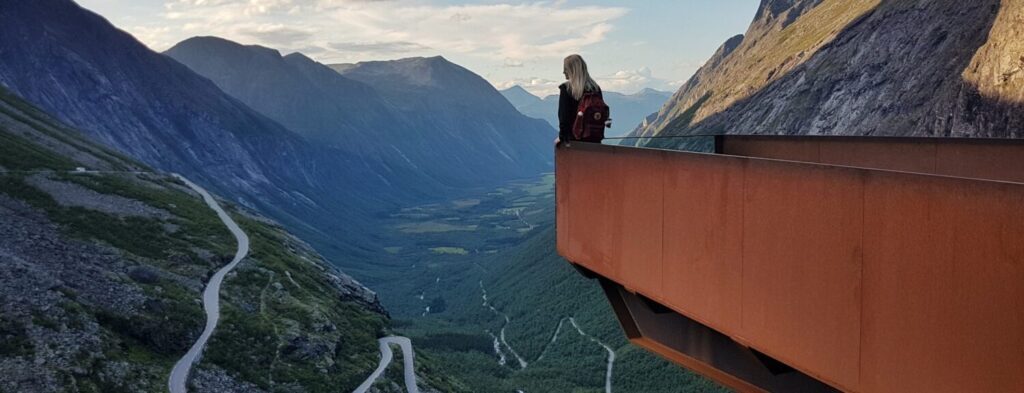
Vrouw met rugzak poseert in de punt van het uitkijkpunt boven Trollstigen. In de verte zie je bergtoppen en de kronkelende bergpas

By train

Besides breathtaking drives, Norway also offers a range of beautiful train journeys! The railways mainly run from Oslo to other major towns, the best known being the line to Bergen. The longest line runs all the way to Bodø, in the northern part of the country. The most famous and most beautiful line is the Flåmsbana. The train travels from the end of the Aurlandsfjord up to Myrdal station high in the mountains, passing the most beautiful places western Norway has to offer. One of my personal favourite train journeys through Norway is the Raumabanen. It runs from Åndalsnes to Dombås and passes 18 remarkable highlights in just 1 hour and 40 minutes.

By ferry

If you’re touring Norway, you can hardly avoid them: ferries. You can drive your car straight onto the boat to get from one side of the fjord to the other. You pay for the crossing per car (driver included) and per passenger. Payment is made on the spot on board. Some ferries run every fifteen minutes or every half hour, but there are also routes that sail once an hour. So keep a close eye on the timetables to avoid a long wait. On most ferries you can get coffee and (my personal favourite Norwegian snack) svele and enjoy the view from the deck. So feel free to step out of your car for a bit!

Ferry timetables in southern Norway: 

Ferry timetables in northern Norway: 

Dreaming of Norway by now?

Then leave the research to me. Choose one of my Norway trips, have your trip completely tailor-made, or set off on your own with a personal travel plan.

View the options

Hiking in Norway

In Norway you can hike endlessly. Whether you want to walk through forests, hike to glaciers or climb serious mountains, there’s something for everyone! From day hikes to multi-day hut-to-hut treks, and from summer to winter adventures. In Norway, outdoor lovers can enjoy themselves to their heart’s content.

National parks

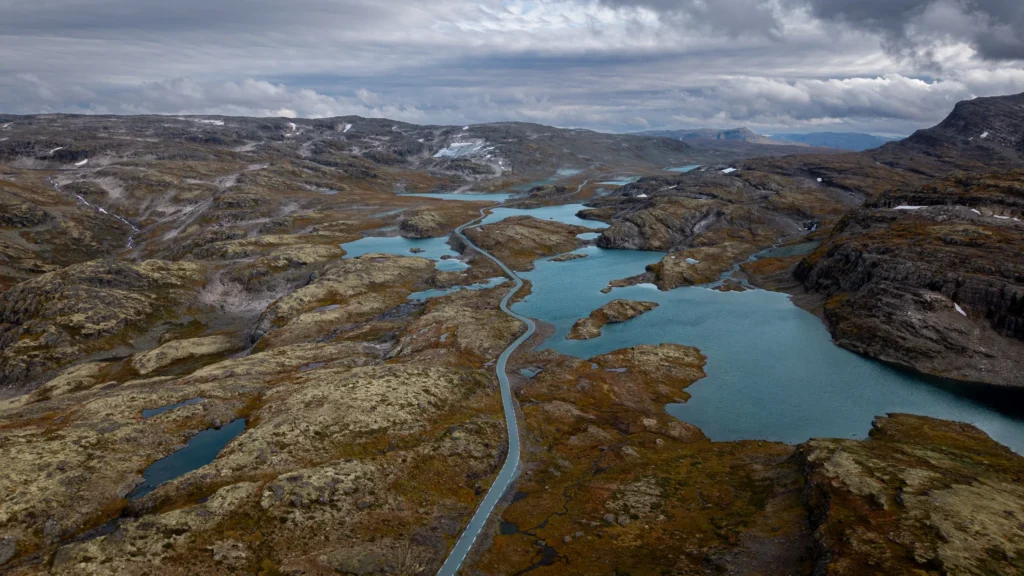
Norway has 47 nature areas that may carry the title ‘national park’, 7 of which are on Svalbard. A national park means that nature is protected and people come second. In Norway, national parks are monitored quite strictly by the government, with a strong focus on preserving ‘wilderness’. Around 85% of Norway’s national parks consist of mountains. From endless high plateaus to impassable peaks, and from treacherous ravines to gigantic glaciers.

No fewer than 40 of them are on the mainland, the best known of which are:
Børgefjell

Dovrefjell-Sunndalsfjella

Folgefonna

Hardangervidda

Jostedalsbreen

Jotunheimen

Øvre Anárjohka

Rondane

Stabbursdalen

The most beautiful hikes

Hiking is of course very personal. One person loves easy going walks through green landscapes, another prefers more extreme climbs through lunar landscapes. One loves glaciers, another would rather visit a cave. I love all of it, so below is a list of my favourite hikes in Norway.

Preikestolen

Norway’s most famous mountain

Trolltunga

the Instafamous troll’s tongue

Romsdalseggen

the most beautiful hike in all of Norway

Besseggen

a ridge between green and blue water

Trollkirka

limestone caves with waterfalls

Litlefjellet

just a 20-minute climb for a big reward

Mardalsfossen

Norway’s second-highest waterfall

My general tips for hiking in the mountains

The basics matter most. Make sure you have good boots, suited to the terrain you’ll be walking on. We always hike in waterproof AB or B category boots.

Choose a daypack of between 20 and 30 litres, with adjustable straps and ideally a breathable back panel or mesh, which prevents unnecessary sweating.

Al-ways check the weather forecast. In the mountains you can always be caught out by unexpected showers, but it’s good to know roughly what to expect.

Make sure you’re in good shape, or match the hike to your fitness. That way you can be sure you’ll get back safely and won’t end up in the newspaper after an (EXPENSIVE) helicopter rescue.

Hiking alone? Tell someone where you’re going and roughly what time you expect to be back. Hiking together? Never leave each other behind under any circumstances. You’re only as fast as the slowest walker.

Use your common sense. Does something feel unsafe? Then it probably is.

Tailor the contents of your backpack to the weather conditions, the type of hike you’re doing and your own needs along the way.

Norway has its own way of marking routes: The Blood Red T’s. The striking red T’s are repainted every year by DNT (Den Norske Turistforening). You’ll come across them on rocks, cairns or other prominent spots. The “T” is meant to guide hikers safely along the route, even in poor visibility, such as fog or snow. 

Want to know more? Read my detailed tips for hiking in Norway.
Download my packing tips for a multi-day hiking backpack here
Wandelen in fjord-Noorwegen: Romsdalseggen

Right to roam

If there’s one thing Norway holds dear, it’s ‘allemannsretten’. Or ‘the right to roam’. This means everyone has free access to nature, including the national parks, and may enjoy it there, as long as nature is left undisturbed. One important rule applies: leave nature as you found it, and where possible even better.

Feel free to pick berries and mushrooms, and you may fish in salt water for your own use without a licence. In northern Norway, special rules do apply to cloudberries.

Be careful with open fires and make sure the fire is properly put out when you leave it. From 15 April to 15 September it’s forbidden to light a campfire in (or near) the forest.

You can pitch your tent anywhere, as long as it’s at least 150 metres from the nearest house. If you want to stay longer than two nights, you need permission from the landowner.

Fjellvettreglene

“The Norwegian Mountain Code” = “Fjellvettreglene”

These rules were created to keep hikers safe.

Be physically and mentally prepared.

Tell those staying behind where you’re going and roughly how long you’ll be away.

Adapt your trip to your ability and the conditions.

Respect the weather and the forecast.

Be equipped for bad weather and frost.

Bring enough gear for yourself and to help others.

Listen to the locals.

Use a map and compass.

Turn back if you doubt you’ll reach your destination.

Save your energy and build a shelter when needed.

In an emergency or if there’s an accident, call the emergency number 113. If your phone can only make emergency calls, you’ll automatically be put through to the emergency services. You can also install the Hjelp 113 app on your phone before you head into the mountains. With this app you can send your location to the emergency services if you’re in danger. Do make sure you set the app up properly beforehand.

Winter in Norway

Northern lights

Last but not least.. From September through April you can see the northern lights in Norway! This natural wonder is caused by solar winds that are fired at the earth and bounce off our atmosphere (read more here!). When the sky is clear and you’re somewhere with little light pollution, you can witness the most beautiful light shows. In summer you won’t see the northern lights, because it’s light almost round the clock. So if you want to see the green rays dance, you really have to brave the less pleasant temperatures and ideally travel to the northern tip of Norway. Tromsø, for example, is the perfect base for a northern lights adventure!

Frequently asked questions about Norway

Contents

Experience Norway for yourself?

Reading about fjords, mountain roads and the northern lights is one thing. Standing there yourself is something else entirely. View the Norway trips and discover which trip suits you.

View all Norway trips