

The idea of a cruise is hugely romanticized. Waking up somewhere different every day, being waited on hand and foot while entertainment and food are all around you. You get to see all the highlights of a country without having to do anything for it! Of course that all sounds wonderful in the brochure, but the reality of a cruise is very different. In this article you’ll learn about the dark side of this industry, so you can better decide whether a Norway cruise is really something that suits you.
Mass tourism in tiny villages
Be very aware that a cruise ship is a form of mass tourism. You probably know the gorgeous pictures of Norway’s UNESCO World Heritage site: the Geirangerfjord. The village of Geiranger lies at the mouth of the stunning, pearly green fjord and is extraordinarily photogenic. Only 250 people live in this dreamy little village. In summer, 140 to 180 cruise ships dock here, unloading 700,000 tourists a year who flood the village like a tsunami. This way you don’t experience the authentic Norway; you become the product yourself.
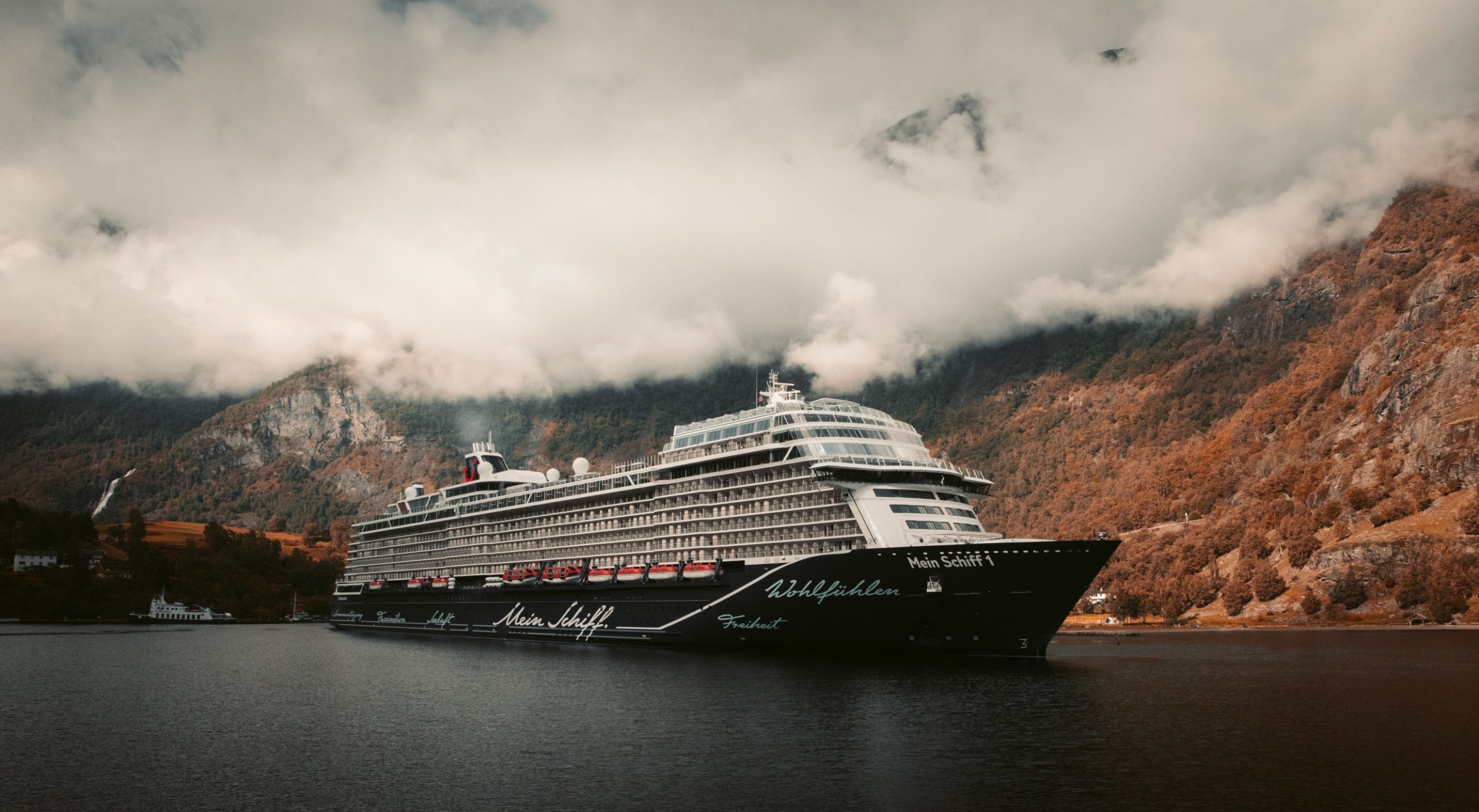
On top of that, visiting Norway by cruise ship hardly contributes to the happiness and prosperity of Norwegians. Cruise ships create a form of so-called hit and run tourism. Countless studies show that cruise ship tourists leave almost no money behind in the places they visit. They arrive, wander around and are often gone again within an hour. They don’t stay the night locally and they eat on board the cruise ship, because “they’ve already paid for it anyway”. As a result, the only thing you leave behind is pollution.
3 days of cruising = 1 year of eating meat = 10,950 showers
Let’s line up a few numbers: In 2006, 15 million people went on a cruise. In 2018 a record number of passengers was welcomed on board, no less than 27.2 million worldwide. Statistics Netherlands (CBS), the national statistics office here in the Netherlands, where I live, calculated that an average cruise ship passenger emits about 225kg of CO2 per day. That’s 10x as polluting as a night of camping in a tent at a campsite. After three days of cruising, you’ve caused as much CO2 emissions as you would by eating meat for a whole year.
One day of eating meat equals a month of showering. So three days of cruising is as polluting as showering 10,950 times. Let that sink in for a while..

How polluting is a cruise ship?
A cruise ship runs on diesel engines or gas turbines, sometimes both. They often burn oil that contains 2000 times more sulfur dioxide than regular diesel. Research by the European think tank Transport & Environment shows that the 203 cruise ships that sailed European waters in 2017 were together responsible for 62 kilotons of sulfur dioxide (SOx*). 47 of these 203 ships were responsible for more than half of these 62 kilotons of sulfur dioxide, making them 10x(!) as polluting as ALL 260 million cars in Europe combined**.
In absolute numbers, Spain, Italy and Greece are the most exposed to SOx pollution from cruise ships, followed by France and Norway. Hurtigruten, the well-known Norwegian ferry and cruise company, ranks 8th and Norwegian Cruise Line 6th in the top 10 most polluting companies when it comes to SOx.
In many coastal towns where the ships dock, they’re the biggest contributor to the total amount of nitrogen oxides (NOx) emitted. In Denmark, Greece and Malta, cruise ships are responsible for more NOx emissions than all the cars in those countries.
Several studies have shown that the CO2 emissions of one cruise ship equal those of 84,000 cars. The emission of particulate matter is comparable to that of a million cars, and the sulfur dioxide emissions of one cruise ship equal those of 376 million cars.
* SOx is a major cause of lung cancer and the source of the acid rain we now consider normal
** The SOx emissions of all 260 million cars in Europe in 2017 were 3.2 kilotons.

Carnival Corporation as the biggest polluter
Cruise company Carnival Corporation comes out of the test the worst. Carnival Corporation owns Costa Cruises, P&O cruises, AIDA cruises, Princess Cruises and Cunard Line. Of the 20 most polluting ships among the 203 cruise ships mentioned earlier, no fewer than seven were part of Carnival Corporation. The Carnival Legend still sails through fjord Norway.
On board a cruise ship you don’t get off very well either. The air on board a cruise ship is twice as bad as the air quality at London’s busiest intersection: Piccadilly Circus. The number of fine particles on board (of P&O’s Oceana in this example) is 84,000 per cubic centimeter on deck, compared to 38,400 in Piccadilly Circus.

Appalling working conditions
In addition, the working conditions for employees on a cruise ship are often substandard. Cruise companies often register their ships in countries where they pay less (or no) tax and can avoid labor laws. As a result, employees often work extremely long days for a minimal salary and are subject to a strict hierarchy that determines salary, employment contracts and living conditions on board.
But there is hope for Norway!
Norway is now setting a good example by already taking measures against the big polluters. These rules were set after research by the Norwegian Maritime Authority showed that cruise ships, especially in summer, are responsible for large amounts of emissions in the fjords.
Fortunately, since March 1, 2019, new environmental rules have applied to cruise ships calling at Norwegian fjords. Among other things, ships are no longer allowed to discharge wastewater or burn waste in the fjords that are protected as World Heritage. Those are the Nærøyfjord, Aurlandsfjord, Geirangerfjord, Sunnylvsfjorden and Tafjorden. Extending the rules to the other fjords is being considered.
Stricter requirements are being set for sulfur dioxide and nitrogen oxide emissions, and those rules will get stricter every year. By 2026 this should build up to the ultimate goal: emission-free fjords. The starting signal was given by lowering the permitted emission limits with immediate effect. The entire cruise industry is required to reduce its CO2 emissions by 40 percent by 2030.
The future of the cruise industry
Luckily, a number of companies are already setting a good example. For instance, you can already sail the Nærøyfjord on a fully electric boat. The “Future of the Fjords” is a carbon fiber ferry with electric propulsion, so it runs entirely on batteries. The energy comes from hydroelectric power plants nearby. It’s a little more expensive, but there are no diesel fumes, no noise and above all a lot less strain on the environment.
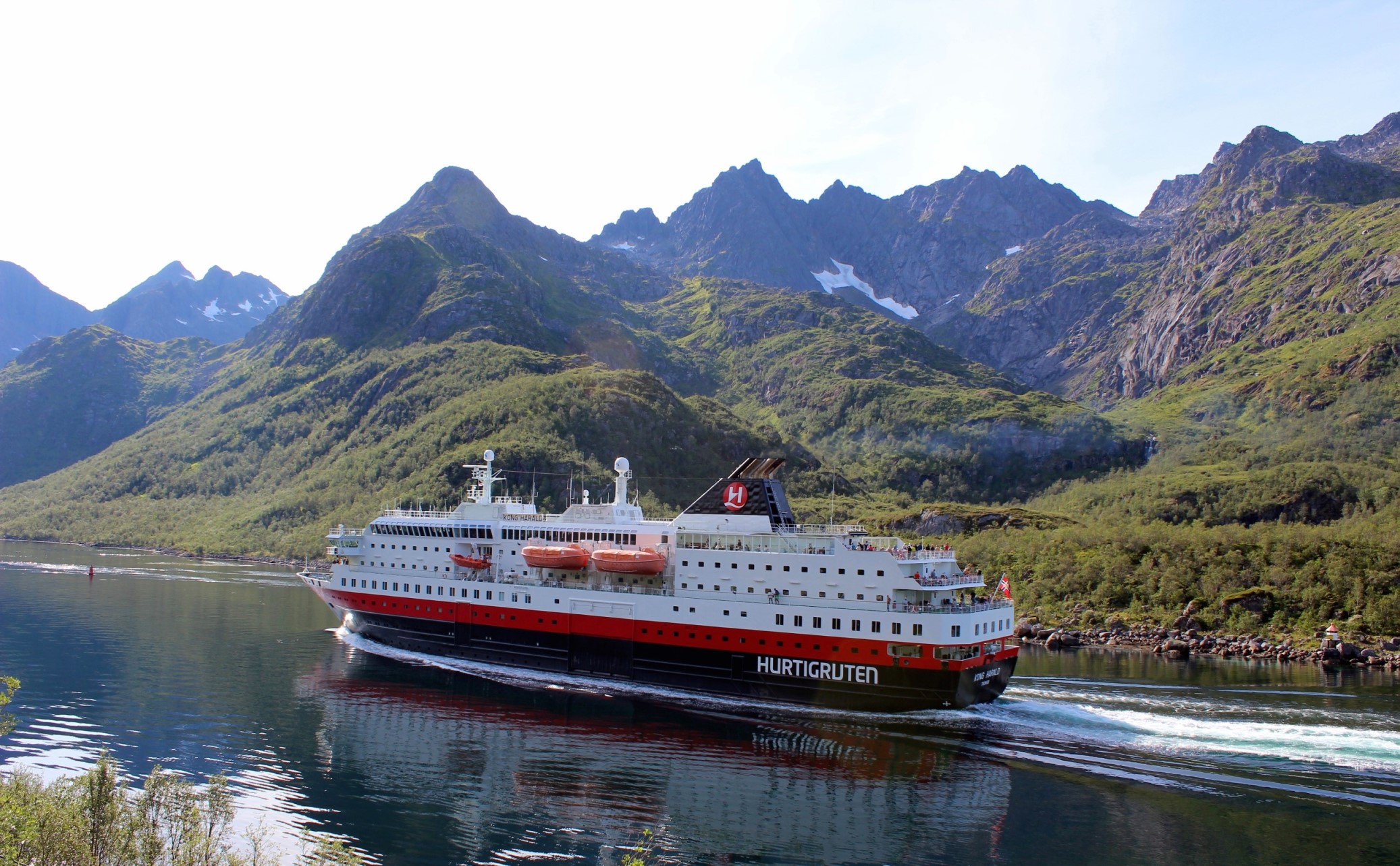
Hurtigruten is also leading the way when it comes to ‘green’ sailing. In 2019 the MS Roald Amundsen was launched, and the MS Fridtjof Nansen will follow in 2020. Both ships are powered by a hybrid battery, making them the first ‘clean’ cruise ships in the world.
So maybe in the future a cruise will actually be a good way to experience gorgeous Norway, but for now you’re really better off taking the car (or your bike).